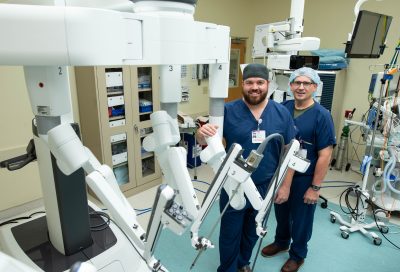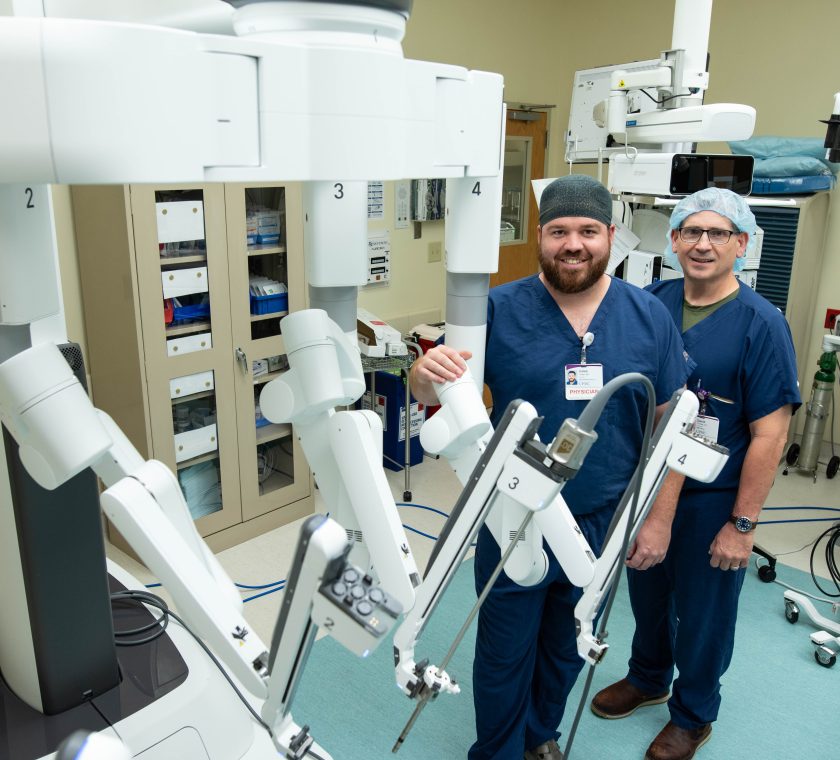
A new era of robotic-assisted surgery has arrived at UPMC Northwest, made possible by the Northwest Hospital Foundation’s largest technology contribution to date.
The Intuitive da Vinci Xi Robotic Surgical System is the most advanced generation of robotic-assisted surgical technology currently available. The system supports surgeons across multiple specialties, most notably general surgery, urology, and gynecology.
The da Vinci system combines advanced computer technology, high-definition 3D visualization, and robotic instruments that are fully controlled by the surgeon. Seated at a console, the surgeon guides the instruments with precise hand movements, allowing for highly controlled, minimally invasive procedures through very small incisions.
This significant advancement in surgical precision, visualization, ergonomics, and patient safety will enhance care by expanding access to minimally invasive procedures at UPMC Northwest. For many patients, those procedures may mean smaller incisions, reduced blood loss, lower risk of complications, less postoperative pain, shorter hospital stays, and a faster return to daily activities.
Just as importantly, this technology helps ensure that advanced surgical care remains close to home. By investing in leading-edge equipment, UPMC Northwest can continue reducing the need for patients to travel outside the region while also strengthening its ability to attract and retain highly skilled surgeons.
“Da Vinci isn’t the future, it’s the present,” said Dr. David Thomas, General Surgeon. “Robotic-assisted surgery is the standard of surgical care, and bringing this technology to UPMC Northwest is an important step in keeping advanced care close to home.”
“This investment strengthens our ability to provide patients with the most precise, minimally invasive surgical options available while supporting the surgeons who deliver that care,” said Jonathan Bailey, President of UPMC Northwest. “We are deeply grateful to the Northwest Hospital Foundation for a transformative gift that will improve patient outcomes, support surgeon satisfaction, and help sustain advanced surgical services in our region for years to come.”